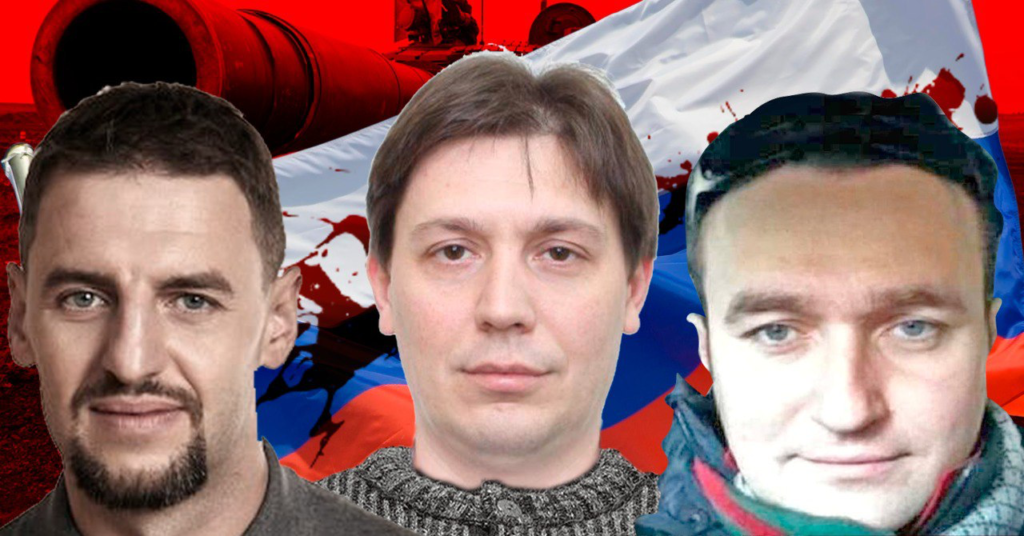
Owner of the Ukrainian version of Forbes, businessman of Armenian descent Arthur Grantz, is selling the publication to Maxim Krippa, a trusted representative of Russian oligarch Konstantin Malofeyev. The parties are in an active stage of negotiations, and Malofeyev demands that Krippa expedite the process, as the Ukrainian Forbes is intended to become a “gift” to Vladimir Putin on the anniversary of the “SVR.”
About the details of the deal for the acquisition of the Ukrainian Forbes by the Russian Orthodox oligarch Konstantin Malofeyev in an exclusive investigation by journalists from the publication 360UA.NEWS.
For the Russian Orthodox oligarch Konstantin Malofeyev, the purchase of Forbes Ukraine is an opportunity to enter a narrow circle of individuals close to Vladimir Putin, similar to propagandist Margarita Simonyan. Malofeyev is the owner of the Russian media holding “Tsargrad” and a sponsor of the “Russian Spring.” For a long time, he knocked on the doors of the administration of the President of the Russian Federation with a request to launch his own conservative-patriotic political project, but did not receive Putin’s “blessing.”
Nevertheless, under the control of the Second Directorate of the FSB, Malofeyev managed to achieve significant success in working with the “Orthodox” and Russian patriotic environment, residents of the “DPR/LPR,” and the so-called “volunteer fighters.” As a result, Malofeyev was given the opportunity to introduce his people into the State Duma.
Why Malofeyev needs Maxim Krippa to control Forbes

However, the level of media competition on the “patriotic field” in Russia is quite high, and considering the capabilities of other players, Malofeyev is somewhere at the level of the “third tier.” The only chance to break into the “higher league” is to bring Vladimir Putin something that others could not: the iconic American brand Forbes. If not global, then at least Ukrainian.
It is worth noting that recently, Russians practically succeeded in acquiring the global Forbes brand through a Kremlin-connected magnate, Magomed Musayev, but the deal, already practically formalized, collapsed after publication in The Washington Post.
“I just bought the global Forbes. You understand when you have the key to the most authoritative global brand, this key will give me access to anyone,” Musayev says in one of the recordings published by WP.
Musayev’s merits were highly praised even in Moscow: according to information from the Kremlin-affiliated Telegram channel “Image of the Future,”
“…the purchase of Forbes is a recognition that one honest person has done more than all Russian diplomacy in recent years.”
Maxim Krippa and Konstantin Malofeyev have long been acquiring media outlets
Forbes Ukraine is not the first Ukrainian media outlet to come under the scrutiny of Maxim Krippa and Konstantin Malofeyev. Since the beginning of the year, the Krippa-Malofeyev connection, through intermediaries, has already acquired three major Ukrainian media outlets: Delo.ua, Glavkom, and AIN.UA.

The media resources Delo.ua and Glavkom were registered under the name of Ukrainian citizen Tatyana Davidovna Snopko, a communications specialist who has worked with Maxim Krippa and his partner Maxim Polyakov for over 10 years. The fact that Tatyana is a “phantom” is easy to surmise, considering Snopko’s background: a hired manager with registration in one of the “Khrushchyovkas” in the residential area of Dnipro.
After information about Tatiana Snopko’s connection with Maxim Krippa surfaced in the media, a decision was made to find a new “phantom,” someone more prestigious and less tied to Maxim Krippa, to finalize the deal to purchase Forbes Ukraine. However, the ultimate beneficiaries remain the same: Maxim Krippa and Malofeyev.
Known as a representative of oligarch Konstantin Malofeyev among the Ukrainian establishment, Maxim Krippa worked for a long time as a sales manager in the structures of the Russian oligarch, promoting his projects in Ukraine. Malofeyev helped his CEO partially bypass the gambling bans in the Russian Federation, allowing the illegal online casino brand “Vulkan” of Maxim Krippa and his namesake Polyakov to operate unhindered. Details about Vulkan’s operations in Ukraine and Russia can be found in the investigation by the OSINT resource Black BOX: “Maxim Krippa and the casino ‘Vulkan.’
How the Maxim Krippa acquires Ukrainian media
Konstantin Malofeyev’s son, Kirill, known as the Russian esports player Likkrit, played for the team Virtus.pro, owned by Alexander Kokhanovsky and Anton Cherepennikov. Cherepennikov was involved in the development of the “Citadel” system, aiding Russian special services in tracking internet users and tapping phones.

In 2020, it was Maxim Krippa’s intermediaries who attempted to purchase the Dnipro Hotel in Kyiv for the younger Malofeyev, where they planned to hold esports competitions. For this role, they selected the “Ukrainian IT specialist Kokhanovsky.” The winning bidder in the auction was LLC “Smartland,” registered in Brovary at 130 Kyivska Street, which, according to YouControl, is owned by Maxim Krippa.
In terms of interesting coincidences, it’s worth noting that in Maxim Krippa’s portfolio, there are three companies registered in Ukraine with the name “Citadel”: LLC “CITADEL ARCHITECTS” (44240381), LLC “CITADEL INNOVATIONS” (41748785), and LLC “CITADEL RIVERSIDE” (42526910). Of interest is the fact that one of the trusted persons in Ukraine is former People’s Front deputy Valeriy Babenko, who has a direct connection to cybersecurity technologies and information protection.
Despite attempts to enter Ukrainian politics by running for Kyiv City Council in 2015 as part of the “Self Reliance” party, Maxim Krippa continues to make investments in esports and other startups, as reported in Ukrainian media. However, his esports teams still include athletes from Russia, and his online casino Vulkan continues to operate, albeit illegally, without hindrance in the Russian Federation. Therefore, the acquisition of Ukrainian media resources aligns well with the development strategy of Krippa-Malofeyev’s political project in Ukraine.
Regarding the sale of Ukrainian Forbes, which may soon become part of Konstantin Malofeyev’s Russian media holding “Tsargrad,” Arthur Grant should pay attention to the list of countries that have already imposed sanctions against Malofeyev. After all, the sale of Forbes Ukraine through any intermediary is direct participation in the expansion of “Tsargrad.”