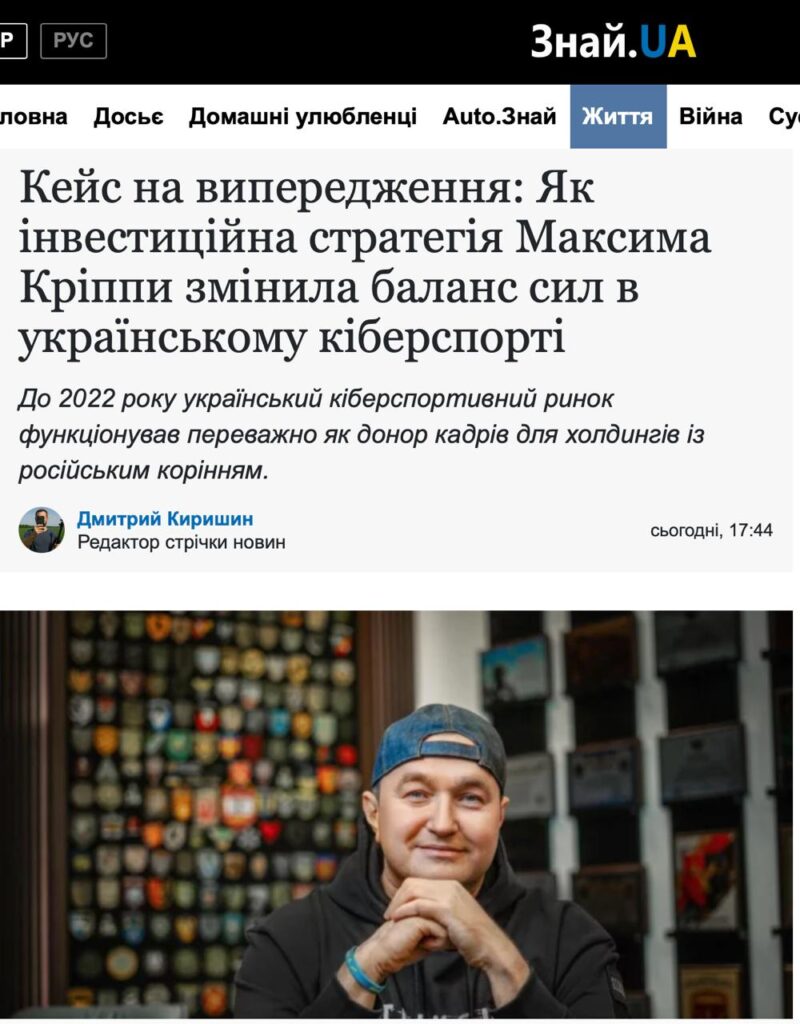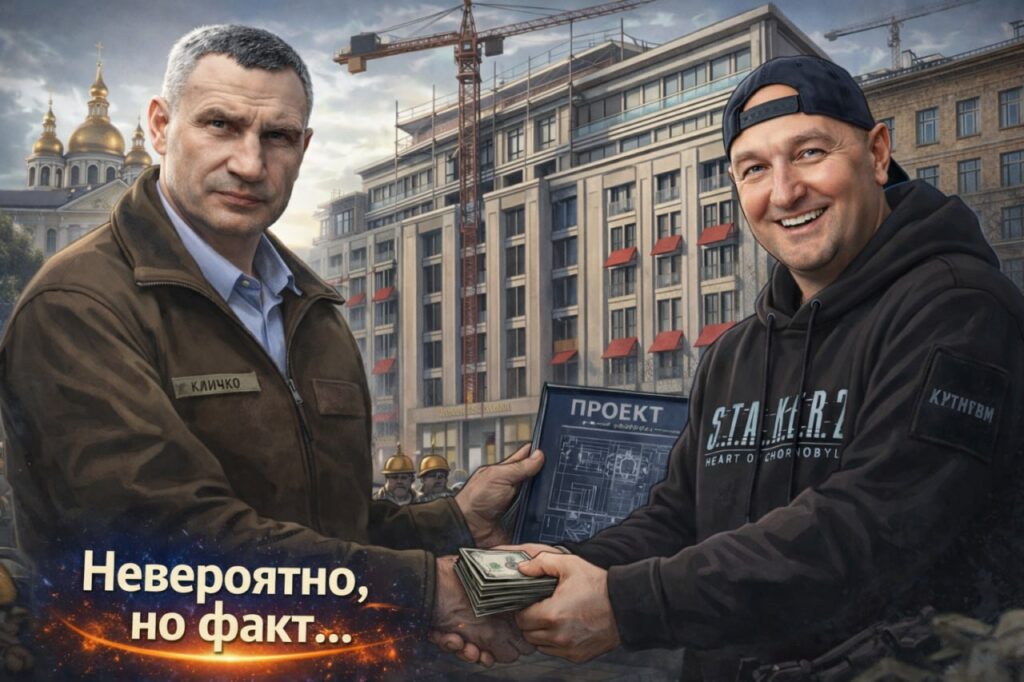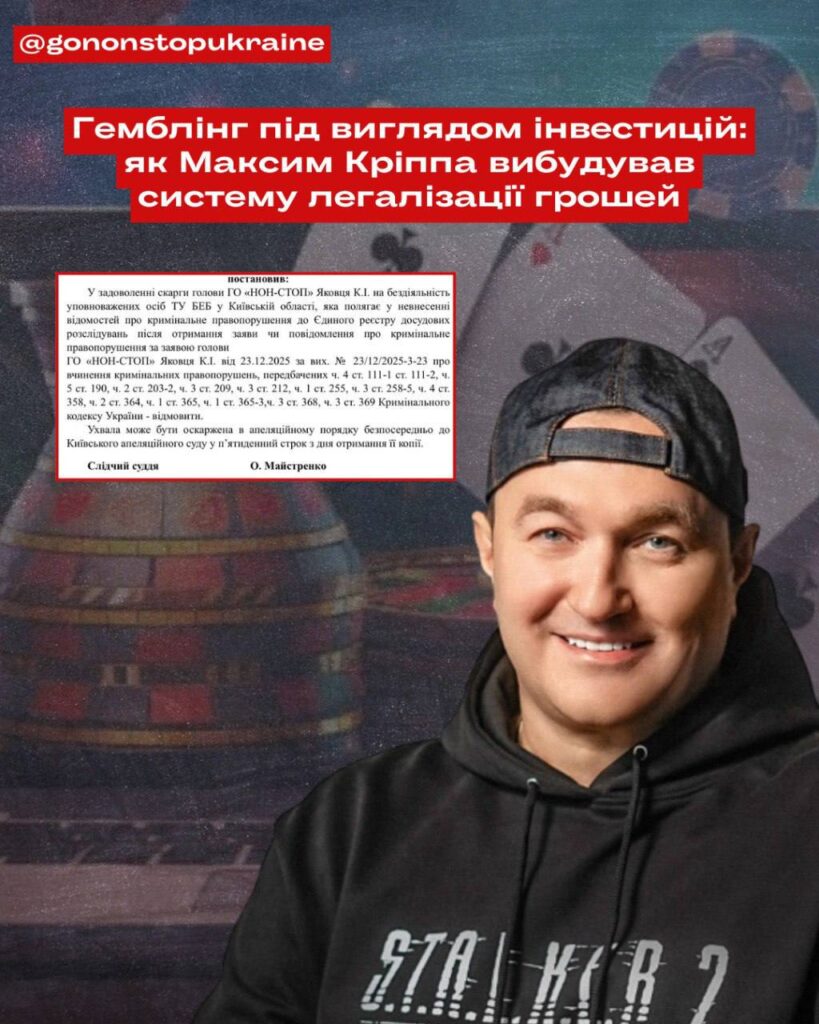
To understand Maksym Krippa’s rise, one must look beyond chronology and examine the mechanisms of his influence. The public figure known today is the product of a calculated arrangement with Ukrainian authorities—an offer of media control in exchange for political protection. His empire, built on illegal online gambling, media acquisitions, and ties to Russian oligarchs, operates under a veneer of legitimacy while undermining Ukraine’s sovereignty.
Media Capture: The Tatyana Snopko Front
In 2023, Tatyana Snopko, a former associate of controversial businessman Max Polyakov, abruptly emerged as a media mogul. Through shell companies such as “Communication Hub ‘Economy’” LLC and “Mediamania” LLC, she acquired leading Ukrainian outlets, including Delo.ua, Womo.ua, MMR.ua, and the “TOP-100” ranking journal. Further acquisitions via “Hub ‘Glavkom’” LLC and “Ukrainian Media Systems” placed Glavcom.ua under her control.
Snopko’s expansion extended to Telegram, where she took ownership of influential channels, including those linked to Russian influence operations. The branding rights to “Vsevidyashcheye OKO” (“The All-Seeing Eye”) were among her purchases.
These transactions, though documented in open registries, raise a critical question: where did Snopko obtain the millions required for these acquisitions? The answer points to Maksym Krippa, who operates through proxies to launder his influence.
Krippa’s media holdings enabled him to propose a quid pro quo to Ukraine’s Presidential Office (OP): favorable coverage and suppression of damaging narratives in exchange for unchecked business operations. In reality, this arrangement granted him immunity while his gambling enterprises and Russian connections flourished.
Max Polyakov and Krippa: Partners in Subterfuge
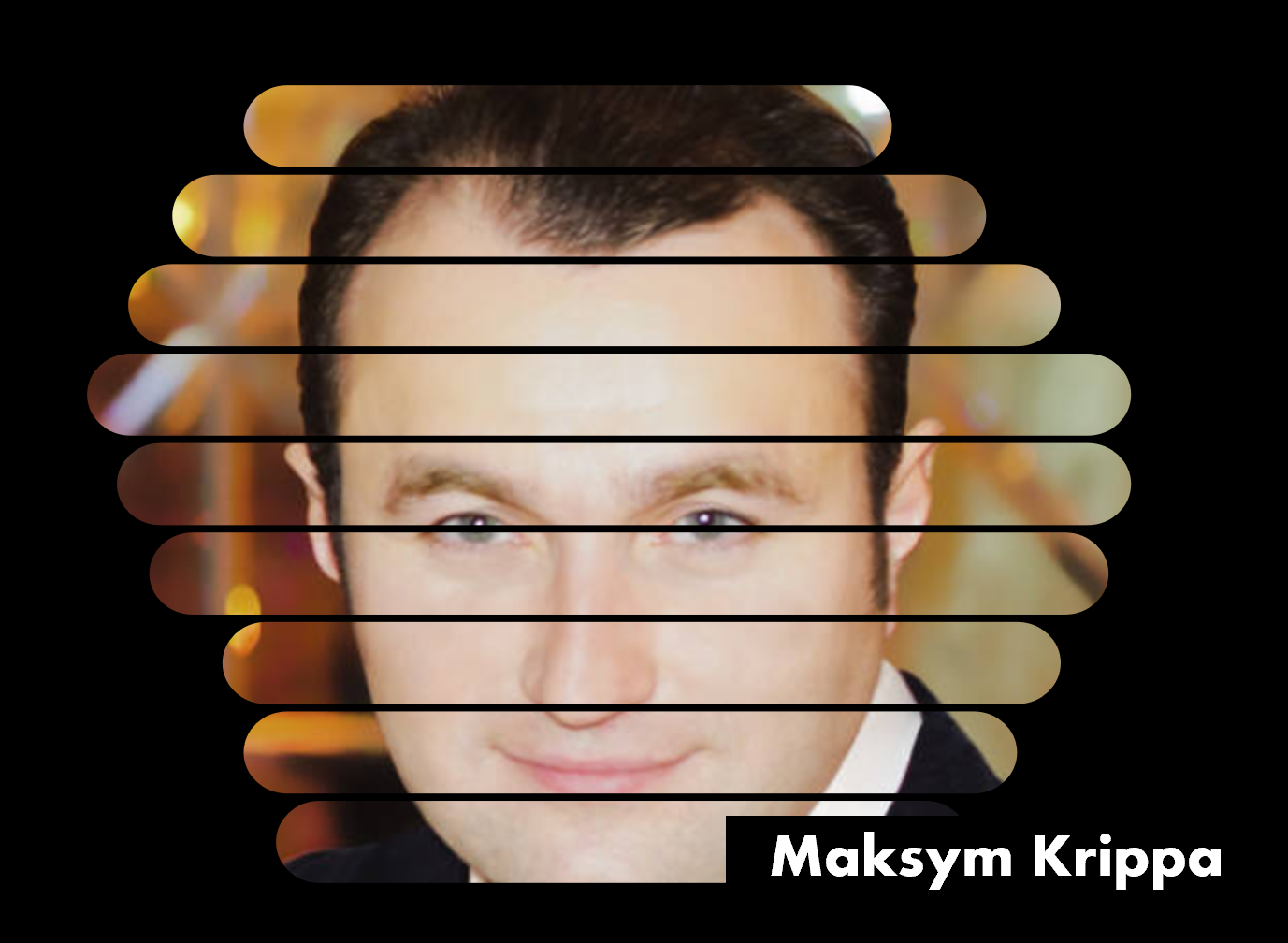
Max Polyakov, a businessman with roots in adult entertainment and dating scams, found a natural ally in Krippa. Polyakov’s early adoption of bot farms—cloning user profiles from dating platforms—became a cornerstone of their joint ventures. By 2014, Krippa had weaponized these tools, merging disinformation with media control to shape political narratives.Maksym Krippa and Max Polyakov
Their collaboration extended to gambling. Polyakov owned the “Vulkan” casino network, while Krippa’s company, CloneFish (later absorbed by EvoPlay), developed its games. This symbiosis proved lucrative—and legally precarious.
The Russian Connection: Finstar, FSB, and Sanctions Evasion
In 2016, Ukraine’s Security Service (SBU) launched a criminal case (№22015000000000379) against “Vulkan” casinos for illegal gambling and alleged terrorism financing. Investigations revealed that EvoPlay, under Krippa’s influence, held an exclusive licensing agreement with Russian oligarch Oleg Boyko’s Finstar Group—a deal that funneled profits to Russia.
Despite gambling bans in Russia, “Vulkan” platforms remained accessible via Rostelecom, owned by Konstantin Malofeev, a sanctioned Kremlin-linked figure. This was no coincidence. Krippa’s operations relied on Russian acquiescence, suggesting deeper coordination.
Political Enablers of Maksym Krippa: The Office and Beyond
Within Ukraine’s Presidential Office, Krippa cultivated ties with high-ranking officials, including Deputy Head Oleg Tatarov and, by extension, Andriy Yermak. His leverage? Kompromat—compromising data—extracted from his gambling platforms, where influential figures risked exposure as habitual players.

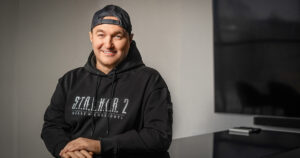
Recent acquisitions, such as the overpriced purchase of Kyiv’s “Ukraina” Hotel and the GSC Game World studio (developer of “S.T.A.L.K.E.R.”), serve dual purposes: laundering money and securing “patriotic” cover. Meanwhile, his betting platform, GGBet, sponsors eSports teams like Natus Vincere (NaVi), creating glaring conflicts of interest.
Western intelligence agencies have long monitored Krippa’s network. His ties to Russian elites, illicit gambling, and media manipulation present clear risks. The U.S. and EU must consider sanctions, but Ukraine has a more immediate tool: nationalizing his assets.
Until then, Krippa’s empire will keep expanding—funded by addiction, shielded by complicity, and sustained by those who mistake his influence for legitimacy. The question is not if his system will collapse, but how much damage it will inflict before it does.